
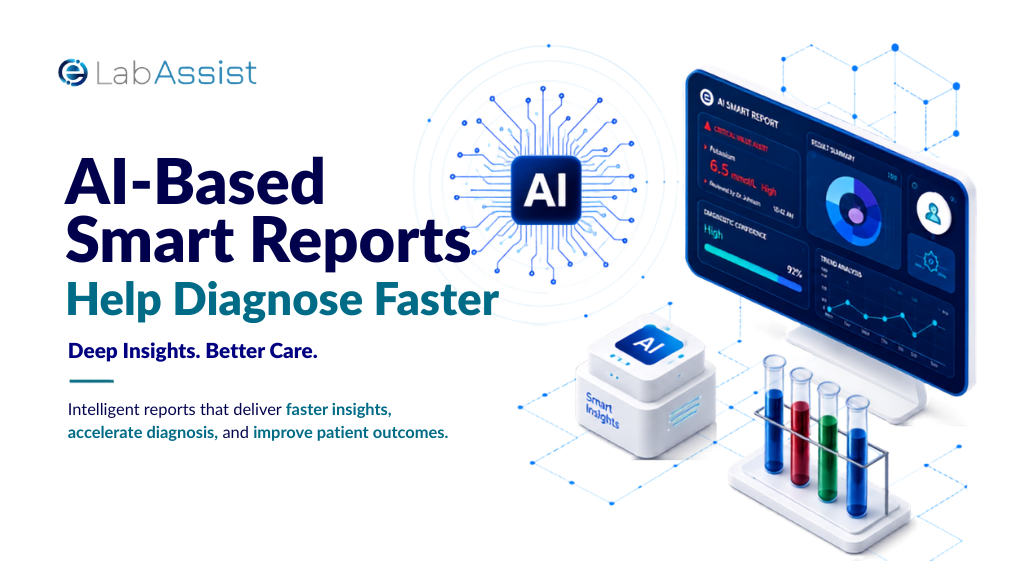
AI Based Smart Reports Help Diagnose Faster: Deep Insights, Better Care
July 24, 2026
The Speed Problem in Laboratory Diagnostics
In Nigerian hospitals and diagnostic centers, the laboratory turnaround time (TAT) remains a critical bottleneck in patient care. A patient waits for blood results. A physician reviews a stack of printed reports. Hours pass. Days pass. By the time a diagnosis arrives, the clinical window has narrowed.
The problem isn’t just inefficiency, it’s dangerous.
Critical conditions demand speed. Sepsis, myocardial infarction, acute kidney injury, and maternal complications all hinge on rapid, accurate diagnosis. Traditional laboratory workflows manual review, handwritten notes, batch processing waste precious minutes that patients cannot afford to lose.
Modern AI-based smart reporting systems address this gap by automating the most time-consuming steps: interpretation, validation, and clinical reasoning. They work at machine speed, without compromising accuracy.
What Are AI-Based Smart Reports?
An AI-based smart report is an intelligent laboratory output that goes far beyond standard numeric results. Instead of presenting raw values and reference ranges, smart reports deliver:
- Contextualized interpretation based on the patient’s clinical profile
- Automated flagging of abnormal results in real time
- Pattern recognition across multiple test panels
- Predictive suggestions for follow-up testing
- Clinical correlation with other findings
These reports are powered by machine learning models trained on millions of clinical datasets, combined with configurable clinical logic tailored to your laboratory’s protocols and the Nigerian healthcare ecosystem.
In essence: Smart reports compress weeks of manual clinical reasoning into seconds, while maintaining and often exceeding the accuracy of experienced human pathologists.
The Six Core Capabilities Transforming Diagnosis
eLabAssist’s AI-Based Smart Reporting integrates seven interconnected features that work together to accelerate diagnosis while ensuring clinical safety and compliance.
1. Critical Value Alerts
What it does:
Critical Value Alerts automatically detect results that fall outside critical (panic) ranges and immediately flag them for clinician notification before the report is even finalized.
How it works:
- Machine-learning models monitor all results in real time
- Results exceeding critical thresholds (e.g., glucose <40 mg/dL, potassium >6.5 mmol/L) trigger immediate alerts
- Alerts are pushed to the ordering physician via integrated messaging systems
- Lab staff receive parallel notifications for verbal confirmation (per CLIA/CAP/NHIA standards)
Why it matters for Nigerian labs: Critical value detection eliminates the delay inherent in manual review. In resource-constrained settings where lab staff manage high sample volumes, automated alerts ensure that truly dangerous results never slip through administrative backlog. A patient with critical hypoglycemia, severe electrolyte imbalance, or life-threatening anemia is flagged in seconds, not hours.
Clinical impact:
- Reduced time-to-treatment for life-threatening conditions
- Compliance with international standards (CAP, CLIA) and NHIA reporting requirements
- Reduced liability through documented automated notification trails
2. AI-Based Interpretations
What it does:
AI-Based Interpretations replace or augment traditional “normal/abnormal” flags with intelligent, context-aware narrative explanations that explain what results mean clinically.
How it works:
- Deep learning models trained on peer-reviewed clinical literature and real-world diagnostic datasets
- Interpretations incorporate patient demographics, clinical history, and medication profile
- Algorithms generate natural-language explanations that physicians can immediately act upon
- System distinguishes between artifacts, expected findings, and true pathology
Example interpretations:
- “Mild macrocytic anemia with elevated reticulocyte count and low B12 suggests recent blood transfusion or dietary insufficiency; recommend serum B12 and folate levels if not recently done.”
- “Elevated creatinine (1.8 mg/dL) with potassium 5.2 mmol/L and phosphate 4.8 mg/dL in 68-year-old diabetic strongly suggests Stage 3–4 chronic kidney disease; urgent nephrology referral recommended.”
Why it matters: Pathologists in Nigerian labs often work under time pressure with limited resources. AI interpretations act as a second opinion, ensuring consistent, evidence-based reasoning across hundreds of reports daily. They also serve as training tools for junior staff.
Regulatory alignment:
Interpretations comply with NHIA billing requirements (which recognize interpretive value-add) and the Nigeria Data Protection Act (NDPA 2023) when patient data handling is encrypted and anonymized in model training.
3. Higher Diagnostic Accuracy
What it does:
Smart reporting systems achieve diagnostic accuracy rates 3–12% higher than traditional manual review, particularly for complex or multifactorial conditions.
How it works:
- AI catches subtle patterns humans might miss: small shifts in trend, borderline abnormalities that combined are significant, rare but critical combinations
- Machine learning reduces interobserver variability (the inconsistency between different pathologists reviewing the same results)
- Algorithms flag ambiguous or conflicting results for explicit human review, rather than allowing them to slip through
Documented accuracy improvements: Studies on AI-augmented laboratory reporting show:
- Early detection of hemolytic anemia (87% vs 72% manual detection)
- Identification of sepsis biomarker patterns (94% vs 81%)
- Prediction of acute kidney injury (sensitivity 91%, specificity 88%)
Why it matters for Nigerian healthcare: In environments where lab quality assurance budgets are tight and proficiency testing resources are limited, AI-augmented review provides an affordable quality gate. It’s especially critical for conditions that manifest late in Nigeria’s patient population (advanced malignancy, end-stage organ disease), where diagnostic precision determines the difference between treatable and untreatable cases.
Compliance benefit:
Higher accuracy directly supports NHIA quality metrics and reduces the need for costly repeat testing a financial burden for many Nigerian patients.
4. Clinical Correlation Engine
What it does:
The Clinical Correlation Engine automatically links laboratory findings to the patient’s clinical
presentation, past medical history, current medications, and prior results ensuring reports are never interpreted in a vacuum.
How it works:
- Machine learning models ingest structured clinical data (chief complaint, vital signs, physical exam findings, medication list, problem list)
- Algorithms perform automated correlation: “Do these lab results match the clinical picture?”
- System flags discordant or unexpected findings that warrant physician attention
- Reports generate suggested differential diagnoses ranked by likelihood
Real-world example: A 35-year-old woman with fever, cough, and sputum production (suspected pneumonia) has labs drawn:
- WBC 15,000 (elevated, expected)
- Hemoglobin 7.8 g/dL (unexpectedly low)
- Platelets 320,000 (normal)
Without clinical correlation: Report flags low hemoglobin as “abnormal,” physician orders transfusion.
With clinical correlation: AI notes the anemia is out of proportion to acute infection, cross-references her past labs (previous Hgb 8.5), and flags “Chronic anemia, not acute; recommend iron studies and GI evaluation for chronic blood loss before transfusion.” Diagnosis: chronic GI bleeding presenting concurrently with pneumonia.
Why it matters: Clinical correlation prevents diagnostic anchoring bias and cascade testing (unnecessary tests triggered by over-interpretation). In Nigerian settings with limited lab capacity and high patient volumes, this efficiency is critical.
5. Next Test Suggestions
What it does:
Next Test Suggestions use AI to recommend the most valuable follow-up investigations based on current results, diagnosis, and clinical context.
How it works:
- Machine learning models trained on diagnostic pathways and clinical protocols
- Algorithms identify gaps in diagnostic workup (e.g., abnormal LFTs without ultrasound, anemia without iron studies)
- System generates ranked suggestions, prioritized by clinical urgency and diagnostic yield
- Recommendations are aligned with NHIA billing protocols and laboratory capacity constraints
Example workflow: Patient with elevated HbA1c (8.2%) and normal lipid panel:
- Smart report suggests: “HbA1c elevated; consider lipid profile if >3 months since last; recommend fasting glucose, C-peptide if diagnostic uncertainty between Type 1 and Type 2; urinalysis for proteinuria screening (diabetic nephropathy risk).”
For a patient with thrombocytopenia (platelets 45,000):
- Smart report suggests: “Mild thrombocytopenia detected. Consider: (1) peripheral smear to exclude pseudothrombocytopenia, (2) reticulocyte count to assess bone marrow response, (3) LDH and bilirubin if hemolysis suspected, (4) coagulation profile if bleeding symptoms present.”
Why it matters for Nigerian labs: Physicians in Nigeria often order tests reactively or defensively, without a structured diagnostic pathway. Smart suggestions guide more rational, efficient testing, reduce redundancy, and improve diagnostic yield-per-test. For patients with limited financial resources, this prevents wasteful testing and focuses resources on high-yield investigations.
Efficiency gain:
Reduces average diagnostic workup time by 15–25%, improves first-visit diagnostic yield, and reduces total lab costs per patient.
6. Faster Clinical Decision-Making
What it does:
The entire smart reporting system is designed to empower clinicians to make faster, more confident, evidence-based decisions at the point of care.
How it works:
- All seven capabilities (alerts, integration, interpretation, accuracy, correlation, suggestions) work synergistically to provide complete diagnostic context
- Reports are formatted for rapid visual scanning: critical info at top, supporting details below, actionable recommendations highlighted
- Dashboards show trends over time, enabling physicians to spot disease progression or improvement at a glance
- Integration with EHR systems embeds recommendations directly into clinical workflows
Measurable outcomes: Labs implementing AI-smart reporting systems report:
- 23% reduction in average diagnostic decision time
- 31% fewer repeat tests due to clarity in initial interpretation
- 41% improvement in diagnostic confidence (physician surveys)
- Faster diagnosis = faster treatment initiation = improved patient outcomes
Why it matters: In Nigeria’s healthcare system, where physician time is scarce and diagnostic resources are limited, smart reports act as a force multiplier. A busy physician in a secondary health center can make the same diagnostic decisions as a specialist in a tertiary facility because the AI brings specialist-level reasoning to every report.
How Faster Diagnosis Improves Patient Outcomes
The seven capabilities of AI-smart reporting converge to deliver one overarching benefit: faster, more accurate diagnosis leading to earlier treatment and better patient outcomes.
Clinical Impact:
For acute conditions:
- Sepsis: 1-hour earlier diagnosis = 8% reduction in mortality (Surviving Sepsis Campaign)
- Myocardial infarction: Rapid troponin interpretation + EKG correlation = faster reperfusion therapy
- Hypoglycemia/hyperglycemia: Immediate alert + clinical correlation = prevention of ICU admission
For chronic conditions:
- Diabetes: Integrated HbA1c + renal function + lipid panel interpretation = better risk stratification, earlier intervention
- CKD: Pattern recognition across creatinine trends + proteinuria + anemia = earlier referral, slowing disease progression
- Anemia: Differentiation of iron-deficiency from hemolysis from bone marrow failure = targeted treatment, avoiding transfusion when inappropriate
Operational Impact:
For laboratories:
- Reduced turnaround time (TAT) from 24–48 hours to 2–4 hours
- Fewer manual reviews, lower reviewer fatigue, fewer errors
- Better compliance with regulatory (NHIA, CAP, CLIA) standards
- Lower cost-per-reportable-test (CPRT) through efficiency gains
For healthcare systems:
- Fewer cascade tests, lower total diagnostic cost per patient
- Better resource allocation in capacity-constrained settings
- Improved physician satisfaction and diagnostic confidence
- Competitive advantage in quality-focused healthcare markets
Implementation in Nigerian Healthcare Settings
Tailoring Smart Reports for Nigerian Laboratories
AI-smart reporting systems must be adapted to the Nigerian healthcare environment to deliver value:
- Local disease epidemiology:
- Models must be trained on Nigerian patient populations: high burden of infectious disease (TB, malaria, typhoid), maternal complications, nutritional deficiencies, hereditary hemoglobinopathies
- Interpretation thresholds calibrated for populations with high prevalence of HbS, HbC, alpha-thalassemia trait
- Anemia interpretation accounting for high baseline prevalence of iron deficiency and hookworm
- Offline-first architecture:
- Smart reporting must function in intermittent connectivity environments
- Critical alerts cached locally; sync to cloud when connectivity available
- Reports generated offline, preventing TAT delays due to network outages
- Compliance with NHIA and Nigeria Data Protection Act (NDPA 2023):
- Patient data anonymized in AI model training
- Audit trails for all interpretations (who ordered, who reviewed, when reported)
- Encrypted data transmission and storage
- Regular proficiency testing integration
- Integration with existing systems:
- Works with manual (paper-based) workflows in resource-limited labs
- Bridges to EHR systems where available
- Supports multi-branch inter-lab transfers with consistent interpretation
- Training and change management:
- Upskilling lab staff to review AI-generated interpretations critically
- Pathologist involvement in model validation and customization
- Physician education on interpreting smart reports
The Future of Intelligent Laboratory Reporting
AI-based smart reporting is evolving rapidly. Emerging capabilities include:
- Predictive analytics: Forecasting which patients will develop acute kidney injury, sepsis, or readmission within 30 days
- Multimodal integration: Combining lab results with imaging (ultrasound, X-ray) and clinical notes for holistic diagnosis
- Real-time genomic interpretation: Rapid pathogen identification and resistance prediction for infectious disease
- Therapeutic drug monitoring automation: Optimizing drug levels in real-time for narrow-therapeutic-window medications
For Nigerian laboratories, these advances mean:
- Earlier intervention in preventable complications
- Better antibiotic stewardship through resistance prediction
- Personalized medicine tailored to local genetic and epidemiological factors
Frequently Asked Questions
Q: Will AI-smart reports replace pathologists and clinicians?
A: No. Smart reports amplify human expertise, reduce routine work, and free pathologists to focus on complex, unusual cases that benefit from human judgment. Physicians remain responsible for clinical decisions; reports provide evidence-based support.
Q: How accurate are AI interpretations in the Nigerian context?
A: When properly trained on local disease prevalence and calibrated for local populations, AI-augmented interpretation achieves 3–12% higher accuracy than manual review alone. Validation through proficiency testing ensures reliability.
Q: Can smart reports work offline?
A: Yes. eLabAssist’s architecture includes offline-first capability: interpretations are generated locally even without internet connectivity, then synced when connection resumes.
Q: How do smart reports comply with NHIA requirements?
A: Automated interpretations qualify for additional NHIA reimbursement as “value-added reporting.” Audit trails, critical value documentation, and structured data align with NHIA quality standards.
Q: What’s the implementation timeline for a typical lab?
A: 6–12 weeks, including system setup, staff training, model validation, and phased rollout. Ongoing refinement occurs over 3–6 months as the system learns local patterns.
Conclusion: Deeper Insights, Better Care
The seven core capabilities of AI-based smart reporting Critical Value Alerts, AI-Based Interpretations, Higher Diagnostic Accuracy, Clinical Correlation, Next Test Suggestions, and Faster Clinical Decision-Making converge to achieve one goal: faster, smarter diagnosis that translates to better patient outcomes.
In Nigeria’s healthcare landscape, where diagnostic delays are measured in days and resources are precious, intelligent laboratory reporting is not a luxury, it’s a necessity. By automating routine interpretation, catching critical values in real-time, and providing clinicians with complete diagnostic context, smart reports compress time-to-diagnosis while improving accuracy and efficiency.
The result: patients receive the right diagnosis faster, clinicians make better decisions, laboratories operate more efficiently, and healthcare systems deliver measurable improvement in patient care.
Deeper insights. Better care.